

11,100 New Homes Are Coming to Cyprus. What Buyers, Sellers and Investors Should Do Before They Arrive
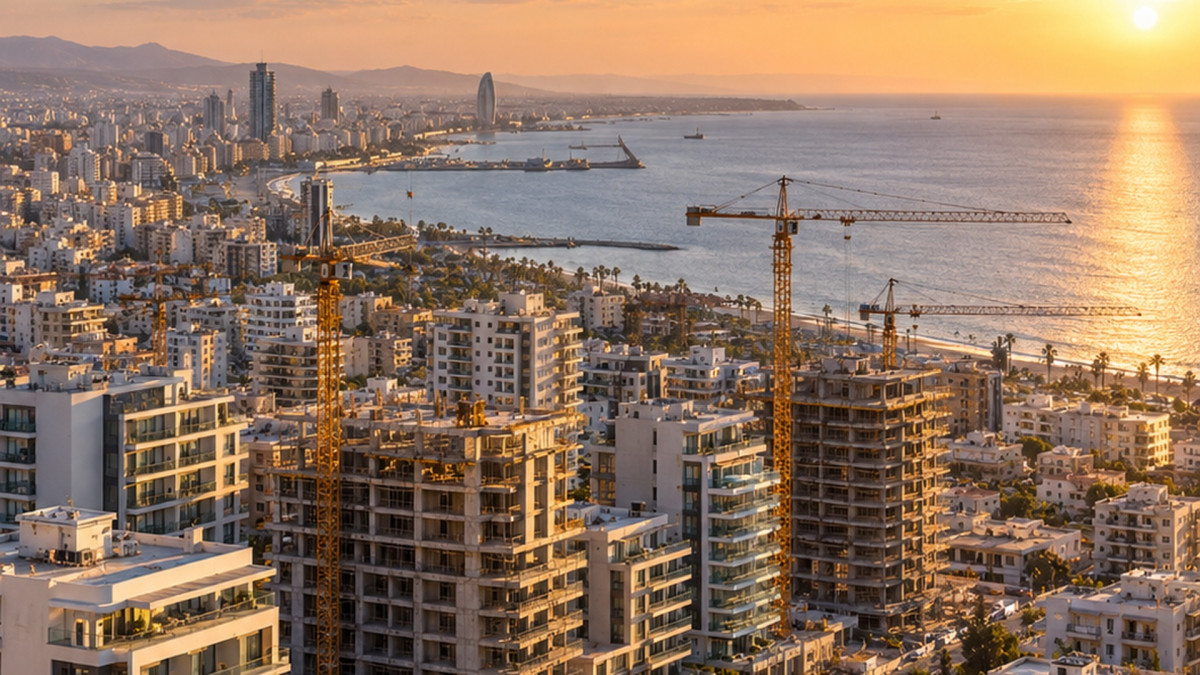
Cyprus is approving twice as many homes as it did three years ago. Building permits in the first half of 2026 provided for 11,100 dwellings, up 67.8% on a year earlier and the most of any half-year since 2020. Almost half of the increase is in Larnaca, which approved four times its 2021–2023 average and now runs level with Limassol and Nicosia. Nearly all of it is apartments: each permit now provides for 2.5 dwellings, up from 1.4.
Yet construction output grew only 1.4% in the same period, 38% of contractors name labour shortage as their main obstacle, and prices are still rising at 7.9% a year. The new homes exist on paper. They will reach the market from 2027 onwards, later and at higher cost than the permits suggest.
The full analysis is in the Delfi Analytics report 11,100 Homes. Who Will Build Them?, available free (in Greek). Here is what it means for your decision, and what we would do.
If you are buying a home
What the data says: prices are at a record and still accelerating, apartments faster than houses (+8.9% against +5.8%). New supply is two to three years away, so waiting for it to bring prices down means waiting until 2027 at the earliest, with no guarantee it will. Where it does arrive first is Larnaca and Nicosia, in standardised apartments.
Steps: if you want a house, buy now; houses are the scarce product in the new permits and the segment where no supply wave is coming. If you want an apartment in Larnaca or Nicosia and can wait, you will have more choice and more negotiating power from 2027; if you cannot wait, negotiate on the off-plan projects already launched, since developers facing labour shortages need pre-sales to finance. In Paphos and Limassol, do not wait: new supply there is small relative to demand. Whatever you buy, ask who the contractor is and whether the price is fixed; a permit is no longer proof that a project will be delivered on time.
If you are selling
What the data says: the market just recorded its first half-year with more than 10,000 sale contracts, mortgage lending is up 19.5%, and the supply that will compete with your property has not been built yet. This is the strongest selling window the data has shown since 2020, and it closes gradually from 2027 as deliveries begin.
Steps: if you own an apartment in Larnaca or Nicosia, sell into this market rather than against the next one; from 2027, buyers will be comparing your flat with new stock at 189 sq m permitted area and €231,000 declared value. If you own a house anywhere, you hold the product that is not being replaced; price accordingly but do not overreach, because buyers now have the data too. If you own a plot, its value lies in whether it can be built on a realistic timeline: a plot with a permit, mature design and a contractor lined up sells at a premium; a bare permit does not.
If you are investing
What the data says: in four of five districts, approved homes are growing three to fifteen times faster than sales. The widest gaps are Larnaca (29.5% of approvals, 21.6% of sales) and Nicosia (27.3% against 21.3%). Paphos is the opposite, with 20% of sales on 9.6% of approvals and 70% foreign buyers. The constraint on everyone is execution, not permission.
Steps: for rental yield, favour completed or near-complete stock in Limassol, Paphos and central Nicosia, where supply is tightest relative to demand, and model on net yield after costs, not gross rent. For capital growth, houses and larger units outperform standardised apartments once the new supply lands. For opportunistic capital, the labour squeeze means developers in Larnaca will need pre-sales and early-stage funding on favourable terms in 2026–2027; that is where the entry prices are. Avoid buying standardised Larnaca apartments off-plan at today's prices unless the contract is fixed-price with a delivery guarantee. And treat the third-country buyer legislation before Parliament as a date, not a rumour: it would weigh most on Paphos, then Larnaca.
What we are watching for you
Discounts or slow pre-sales on new Larnaca projects, the first sign of oversupply. Progress on construction labour from third countries, which sets how fast permits become homes. The vote on third-country buyers. And the gap between apartment and house price growth: when it closes, the apartment wave has arrived.
Our view
The permit is now the easy part. For the next eighteen months, the Cyprus market rewards those who act on the supply that exists and those who position for the supply that is coming, and punishes those who confuse the two. Delfi Properties Cyprus works with buyers, sellers and investors across all five districts, backed by the Delfi Analytics desk, so that your decision is based on the data rather than the headline.
If you are weighing a purchase, a sale or an investment in Cyprus, our team is a message away.
Basis: Delfi Analytics, 11,100 Homes. Who Will Build Them? Cyprus Building Permits, H1 2026, and the sources cited there. General information, not investment, tax or legal advice.